Ever since reading an article entitled “Riders on the Storm” in Hot Rod Magazine in February 1990 about R.J. Gottlieb and the Big Red Camaro surpassing 200 mph on Route 318 south of Ely, Nevada during the Silver State Classic Challenge, I have wanted to participate in open road racing.
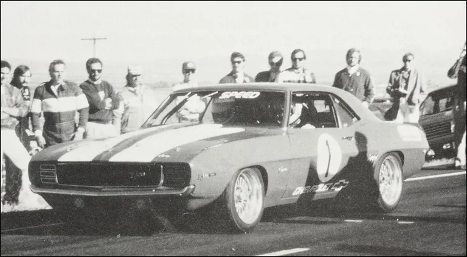
Many of my friends who participate in open road racing events now tell the same story of reading about Big Red completing the 90-mile course in 27 minutes, 54 seconds at an average speed of 197.99 mph and reaching a top speed of 222 mph.
It was many years before I would find myself at the starting line of the Sandhills Open Road Challenge sitting in the driver’s seat next to my oldest son Andrew at the wheel of his 2009 Chevrolet HHR SS. That was in 2017. So far, I have participated in a total of 18 open road races.
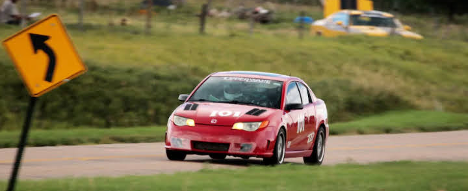
For several years we raced by 2006 Saturn.
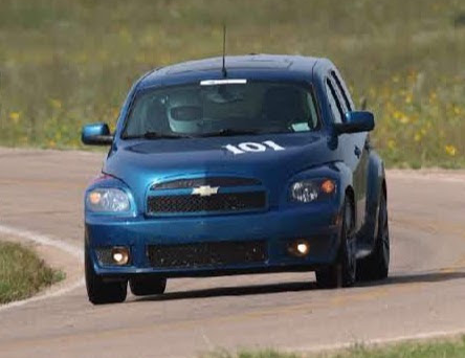
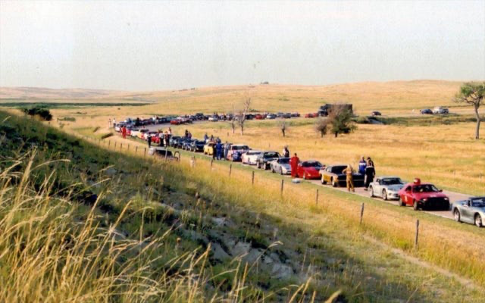
It is not uncommon to see unusual cars at these events either such as PT Cruiser above.
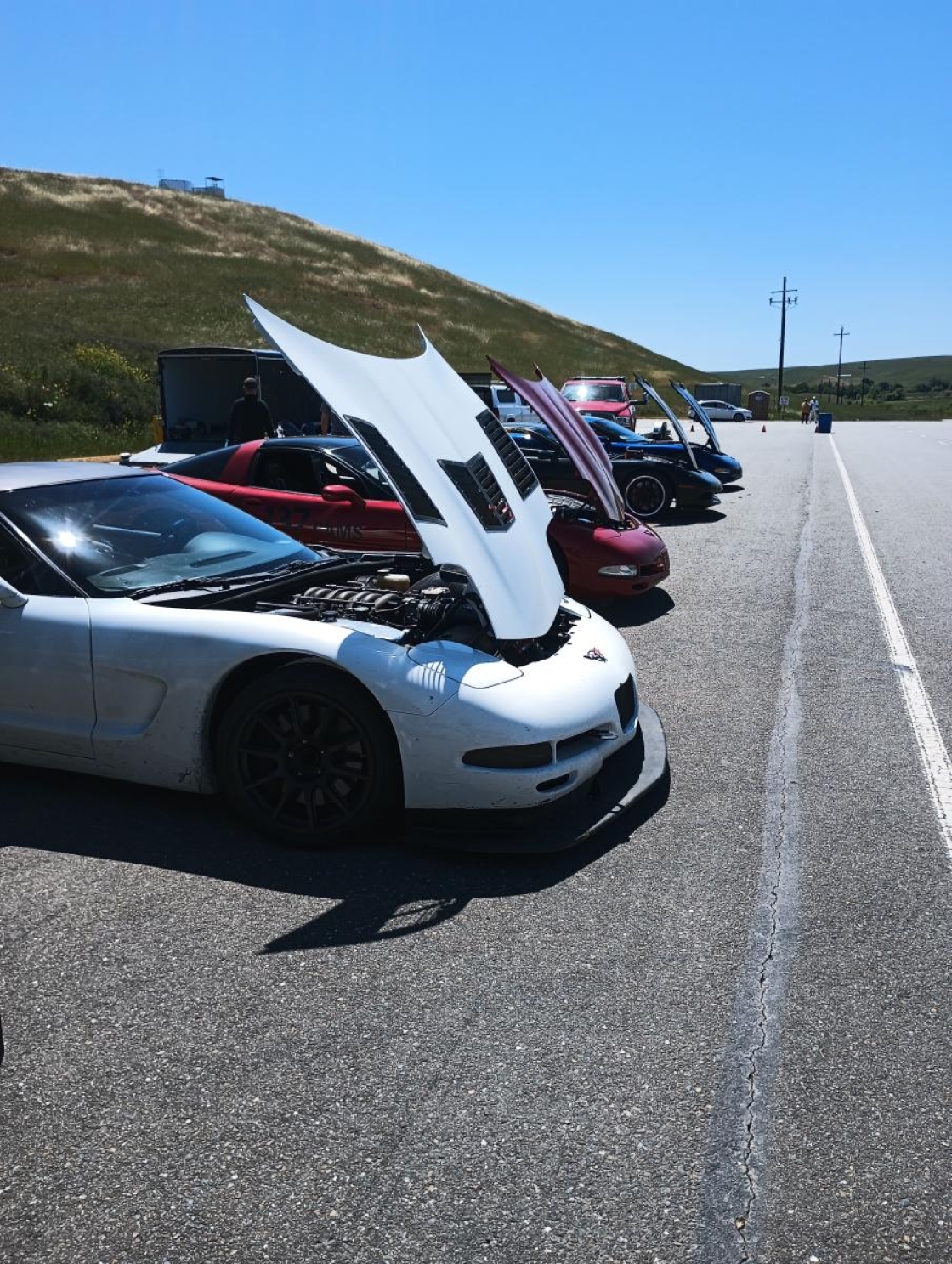
I have since upgraded to a lightly modified 2000 Chevrolet Corvette that is capable of much higher speeds. We have competed in target speed classes from 85 mph in the Loup 2 Loup race to 140 mph in the Big Bend Open Road Challenge. Each target speed class has a maximum and minimum allowable speed. The maximum speed allowed in the 140 mph class is 168 mph, a speed we successfully maintained for several miles in April 2026.
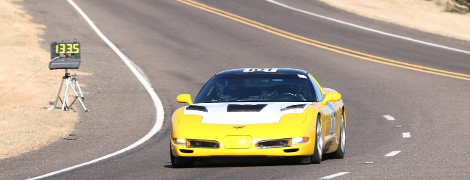
Open Road Racing is a form of time-speed-distance (TSD) event (also called a regularity rally) with the object of driving a course in a specified time based on the specified target or average speed you chose. These events are carried out at high speeds on closed public highways.
There are six such events each year in the US:
- Silver State Classic Challenge (SSCC) sscc.us
- Nevada Open Road Challenge (NORC) sscc.us
- Big Bend Open Road Race (BBORR) bborr.com
- BBORR 2.0 - bborr.com
- Sandhills Open Road Challenge (SORC) sorcrace.com
- Loup 2 Loup Open Road Race (L2L) sorcrace.com
These events are all run by non-profit organizations that donate the proceeds to worthy causes. Often they are used to support education and scholarships in their respective communities.
The SORC and L2L events are held in the Sandhills area of Nebraska about an hour north of North Platte, and are held during the same week. They are 55 miles and 23 miles respectively. They are held the second week of August each year.
SSCC and NORC are held on Route 318 south of Ely, Nevada. They are 90 miles and 177.6 miles respectively. They are held in May and September.
BBORR and BBORR 2.0 are held on Highway 285 between Fort Stockton and Sanderson, Texas. Both are 118 miles. They are held in April and October.
All but the SSCC are divided into two legs with a short break in between.
These events are scheduled so that a participant may enter all six each year. Since they often fill up, there is a lottery to determine who will participate in the event the number of entries exceeds the allowable participants.
Competitors attempt to match specified target or average speeds which range from 80 to 180 mph. At the lower speeds, unmodified production vehicles can be used, while straightforward safety modifications can permit participation in higher speed classes.
The target speed is the speed a driver tries to average during the event. Tech speed is the maximum allowable speed for each target speed class and is based on required safety equipment.
Passenger cars, sports cars, SUV’s and Pickups are all allowed to participate as long as they meet the safety requirements for their chosen class. Often vehicles are modified to be capable of negotiating the course at speeds that would otherwise be unattainable. Some participants even bring fully prepared race cars.
The Big Bend Open Road Race, Nevada Open Road Challenge and Silver State Classic Challenge have unlimited classes where participants seek to attain the highest average speed possible. In order to participate in the unlimited class, one must successfully compete in lower speed classes and work up to the unlimited class. Those vehicles are required to have extensive safety equipment.
“The fastest [open] road race in the world [as certified by Guinness World Records] is the Silver State Classic Challenge held on Nevada's Route 318, in which the fastest cars can surpass speeds of 394 km/h (245 mph) over the 145-km (90-mile) course. The highest ever average speed in the race was 353.4811 km/h (219.6430 mph), by Robert Allyn (driver, USA) and David Bauer (navigator, USA) in a 2001 Monte Carlo NASCAR during the 2017 Nevada Open Road Challenge, on 21 May 2017.” (https://www.guinnessworldrecords.com/world-records/fastest-open-road-race)
The record for the Big Bend Open Road Race was broken in October 2025 by John Anhalt and his navigator Kelli Hughes in John’s heavily modified 2019 Corvette. They broke the 13 year record of 172.697mph set by Tom Whalen in his 2002 Corvette when they completed the two 59 mile legs at an average speed of 173.004mph with a top speed of 213mph. They pushed the car so hard the hot exhaust gases melted the rear facia of the car.
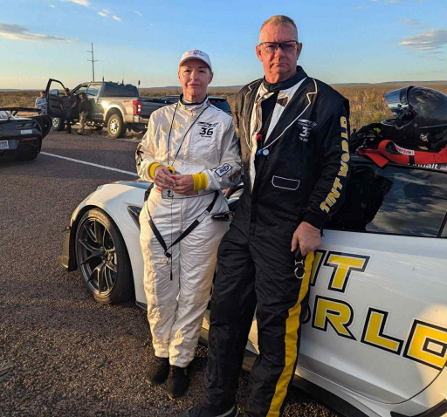
Most drivers choose to have a navigator to call out obstacles ahead, and to keep track of time. Some brave souls brave the road solo. At higher speeds it is recommended to have a navigator.
Many teams use sophisticated electronic timing and GPS equipment. The best time recorded has been 0.000 seconds off perfect. Winning times are often less than 0.5 seconds off perfect.
There are now classes that do not allow electronic timers or GPS equipment and are limited to traditional stopwatches for timing. These classes help reduce the cost of competing since some timing systems cost more than $1000.
Our best has been 0.195 seconds fast for a third place finish in the 2023 Loup 2 Loup race. We have placed fourth 3 separate times, once missing third by 0.015 seconds. We have had some poor finishes and one DNF due to a faulty throttle position sensor.
DNFs are not uncommon due to high temperatures during the race. It is frequently in the 90s during these events. Shedding heat is always a concern.
Practice is permitted only when the roads are open to normal traffic and must be kept within legal speed limits. Drivers caught exceeding the posted limits during practice will be disqualified and not be allowed to race. This provides an additional challenge, since corners cannot be practiced at speed. This makes it extremely important to document all the turns and blind hills well before the race.
In April we ran the Big Bend Open Road Race in the 140mph target speed class in my 2000 Corvette. It is equipped with 6-point harnesses, a 4-point rollbar and hand-held fire extinguisher held in with a quick release mount. My navigator had very detailed notes of the road to help me navigate the 60 turns over each of the 59 mile legs.
Blind hills and turns are particularly difficult to negotiate at speed without good notes and a navigator to read them. Turns can be quite different when travelling in the opposite direction. Our corner speeds in that event ranged from about 110 mph to over 160 mph. We were limited to speeds between 110mph (30mph below target speed except in corners) and 168mph (tech speed for our class).
Safety equipment is tested and certified by the SFI Foundation, Inc. (SFI). SFI is a non-profit organization established to issue and administer standards for the quality assurance of specialty performance and racing equipment. Helmets are tested and certified by the Snell Foundation.
We were required to have 5 or 6- point racing harnesses, SFI listed head and neck restraint system, fire suits, gloves, shoes, socks, and balaclava, and a Snell SA2020 full-face helmet at a minimum. Depending on the vehicle and target speed, a rollbar or roll cage may be required.
We chose to add a rollbar to my Corvette for added safety.
The slowest classes require only current Snell SA rated helmets, non-synthetic long sleeve shirts and long pants, leather gloves and shoes, OEM 3-point belts and a fire extinguisher held in place by a metal quick release bracket.
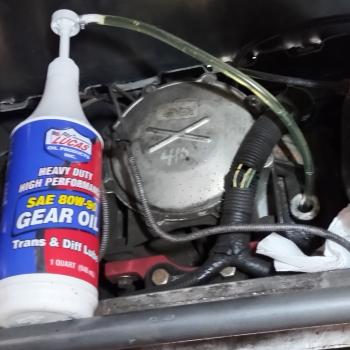
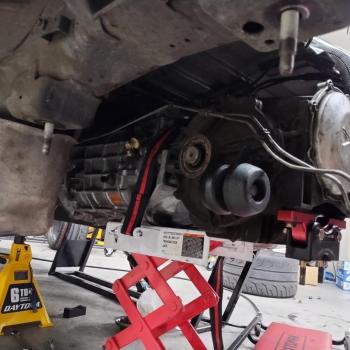
One of the biggest challenges is shedding heat. Slower vehicles are normally good with the OEM cooling system in excellent working order. Faster classes will require additional oil, transmission and differential coolers to help keep temperatures in a safe range.
Cars are released in 30 to 60 second intervals to maximize the distance between them. It is rare, but sometimes cars pass one another. Passing is strictly limited to straights and cannot be done in a corner.
Open road racing has become a passion for me. In addition to the thrill of speed and challenge of hitting the proper time, I enjoy the camaraderie we share among the participants and locals who help make the events happen.